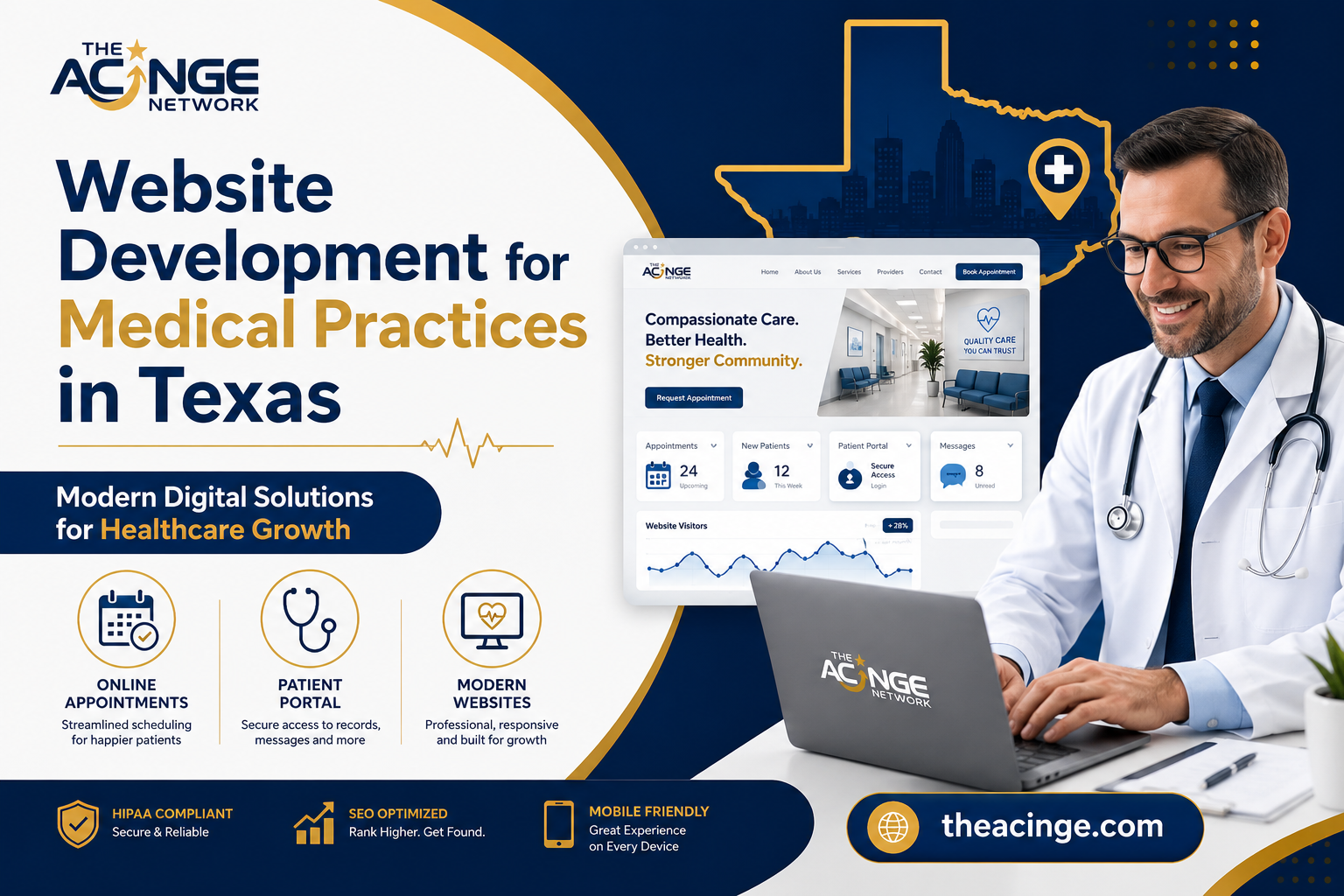
Website development for medical practices in Texas has become a critical investment for healthcare providers looking to improve patient engagement, increase appointment bookings, and strengthen their online presence. In today’s digital-first environment, patients expect healthcare organizations to provide fast, secure, and user-friendly online experiences.
Whether you operate a family practice, dental clinic, urgent care center, specialty medical office, or healthcare organization, your website often serves as the first point of contact between your practice and potential patients.
A professional healthcare website does more than provide information. It helps build trust, improve accessibility, streamline communication, and support practice growth. As competition among healthcare providers continues to increase throughout Texas, organizations that invest in modern website development gain a significant advantage.
Why Healthcare Websites Matter More Than Ever
Patients today research healthcare providers online before making decisions. They compare services, read reviews, review physician profiles, and evaluate the quality of a provider’s website before scheduling appointments.
If your website appears outdated, difficult to navigate, or lacks essential information, patients may choose a competitor instead.
Website development for medical practices in Texas helps healthcare providers meet modern patient expectations by creating digital experiences that are informative, accessible, and easy to use.
Benefits of Professional Website Development
Improved Patient Trust
Trust is one of the most important factors in healthcare. A professionally designed website immediately communicates credibility and professionalism.
Patients want to know:
- Who will be providing care
- What services are offered
- Where the practice is located
- How appointments can be scheduled
- What credentials providers possess
A professional website helps answer these questions and builds confidence before a patient ever visits your office.
Better Patient Accessibility
Modern patients expect access to healthcare information at any time.
A well-designed healthcare website provides:
- Office hours
- Contact information
- Service descriptions
- Insurance details
- Appointment scheduling options
- Provider profiles
This accessibility improves the patient experience while reducing administrative workload.
Increased Appointment Requests
One of the primary goals of healthcare website development is generating more patient appointments.
Features such as online booking forms, appointment requests, and contact forms make it easier for patients to connect with healthcare providers.
Convenience often leads to higher conversion rates and increased patient acquisition.
Essential Features Every Texas Medical Website Needs
Mobile-Friendly Design
More than half of healthcare website traffic now comes from mobile devices.
Responsive design ensures your website works seamlessly on smartphones, tablets, and desktops.
Mobile optimization improves user experience and helps increase search engine visibility.
Online Appointment Scheduling
Patients increasingly expect online scheduling capabilities.
Online booking systems help:
- Improve convenience
- Reduce phone calls
- Increase appointment requests
- Enhance patient satisfaction
Provider Profiles
Patients want to learn about physicians before scheduling appointments.
Provider profiles should include:
- Professional experience
- Specializations
- Certifications
- Education
- Professional photographs
These details help build trust and improve engagement.
Patient Education Resources
Educational content helps position your practice as a trusted authority.
Examples include:
- Health tips
- Wellness guides
- Preventive care information
- Frequently asked questions
Patient resources also improve SEO performance by providing valuable content for visitors.
Secure Contact Forms
Healthcare websites must prioritize privacy and security.
Secure forms help patients communicate with your practice while maintaining confidence in your organization’s professionalism.
SEO Benefits for Healthcare Websites
Search engine optimization plays a major role in healthcare website success.
SEO helps medical practices:
- Rank higher in search results
- Attract local patients
- Increase website traffic
- Improve visibility
- Generate more appointment requests
Local SEO is especially important for healthcare providers serving specific Texas communities.
Why Texas Healthcare Providers Need Digital Solutions
Texas continues to experience population growth, creating increased demand for healthcare services.
Patients expect digital convenience, including:
- Online scheduling
- Fast-loading websites
- Mobile accessibility
- Easy communication channels
Healthcare providers that embrace digital transformation are better positioned to meet these expectations.
Common Website Mistakes Healthcare Providers Make
Many medical websites fail to achieve their goals because they suffer from common problems:
Outdated Design
Old designs can negatively impact patient perception.
Slow Website Performance
Patients often leave websites that take too long to load.
Poor Navigation
Visitors should be able to quickly find important information.
Lack of Mobile Optimization
Mobile usability is essential in today’s healthcare environment.
Future Trends in Healthcare Website Development
Healthcare websites continue evolving through new technologies and patient expectations.
Emerging trends include:
- Telehealth integration
- AI-powered patient support
- Interactive patient portals
- Personalized healthcare experiences
- Enhanced accessibility features
Medical practices that adopt these innovations can improve both patient satisfaction and operational efficiency.
Why Partner with The Acinge Network
The Acinge Network helps healthcare organizations strengthen their digital presence through professional website development and digital solutions.
Healthcare providers can benefit from:
- Modern website design
- Mobile optimization
- User-focused experiences
- Secure digital solutions
- Scalable web development
The goal is to create websites that support patient engagement, improve accessibility, and contribute to long-term organizational growth.
Conclusion
Website development for medical practices in Texas is no longer optional. It has become a vital component of patient engagement, communication, and growth.
Healthcare providers that invest in professional website development can improve patient trust, increase appointment requests, and create better digital experiences.
As healthcare continues to evolve, organizations that prioritize digital transformation will be better positioned to meet patient expectations and remain competitive throughout Texas.