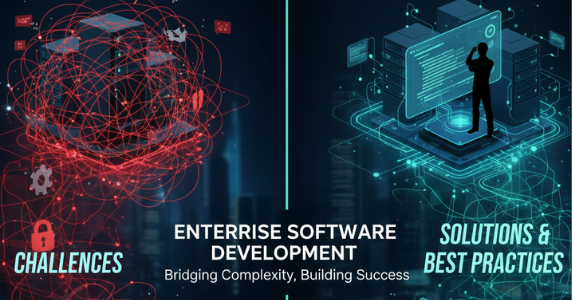
Enterprise software development is a critical aspect of modern business operations. Large organizations rely on enterprise applications to manage complex workflows, integrate multiple departments, and maintain seamless communication across global operations. Unlike consumer software, enterprise software must support scalability, security, compliance, and customization to meet unique business requirements.
This blog provides a detailed overview of enterprise software development, explores the challenges businesses face, presents effective solutions, and outlines best practices to ensure successful implementation and long term value.
What Is Enterprise Software Development
Enterprise software development involves designing, building, and maintaining applications that support the operations of large organizations. These applications may include enterprise resource planning (ERP) systems, customer relationship management (CRM) platforms, supply chain management software, human resource management systems, and more.
Enterprise software is typically characterized by its ability to handle large volumes of data, integrate with multiple systems, and provide robust security and compliance features. Development requires a strategic approach to ensure scalability, reliability, and efficiency.
Common Challenges in Enterprise Software Development
Developing enterprise software is complex, and organizations often encounter several challenges:
1. Scalability and Performance
Enterprise systems must handle high volumes of transactions, data, and users without affecting performance. Designing software that scales efficiently is a significant challenge, especially for global organizations with fluctuating workloads.
2. Integration with Existing Systems
Large organizations often have multiple legacy systems and applications. Integrating new software with existing systems can be complex, requiring careful planning to avoid data inconsistencies and workflow disruption.
3. Security and Compliance
Enterprise applications often manage sensitive data, including financial information, personal employee records, and intellectual property. Ensuring security and complying with industry regulations such as GDPR, HIPAA, or SOX is critical.
4. Customization and Flexibility
Businesses have unique workflows and processes. Enterprise software must be customizable and flexible to accommodate these requirements without extensive redevelopment.
5. Cost and Resource Management
Enterprise software development can be resource intensive. Managing development costs, timelines, and skilled personnel is a constant challenge for organizations.
6. Change Management
Introducing new enterprise software often requires changes in business processes and employee training. Resistance to change can slow adoption and reduce the software’s effectiveness.
Solutions for Enterprise Software Development Challenges
Scalable Architecture Design
Implementing scalable architecture, such as microservices or cloud native design, ensures enterprise applications can grow with organizational needs. Load balancing, distributed databases, and caching strategies enhance performance.
Effective System Integration
Using APIs, middleware, and integration platforms enables smooth communication between new enterprise applications and existing systems. This minimizes data silos and supports unified workflows.
Robust Security Measures
Enterprise software should include encryption, role based access control, secure authentication, and regular vulnerability testing. Compliance requirements must be incorporated into the software design and continuously monitored.
Customization and Modular Development
Developing modular applications allows businesses to add or modify features without affecting the entire system. Customizable workflows, dashboards, and reporting tools improve usability and alignment with business processes.
Agile and Iterative Development
Agile development methodologies allow for iterative releases, continuous feedback, and faster time to market. This approach helps manage costs, reduce risks, and adapt to evolving business requirements.
Employee Training and Change Management
Proper training and communication strategies ensure smooth adoption of new enterprise software. Change management plans help employees understand benefits, reducing resistance and increasing productivity.
Best Practices in Enterprise Software Development
1. Conduct Thorough Requirement Analysis
Understand business goals, workflows, and pain points before starting development. Detailed requirement analysis ensures the software addresses real organizational needs.
2. Prioritize Security and Compliance
Integrate security and regulatory compliance at every stage of development rather than as an afterthought. Regular audits and testing help maintain integrity and trust.
3. Implement Scalable and Flexible Architecture
Use cloud based solutions, microservices, and modular design to support scalability, flexibility, and easy future upgrades.
4. Use Agile Development Methodologies
Agile practices, including continuous integration, automated testing, and iterative releases, improve collaboration, quality, and speed of delivery.
5. Foster Collaboration Between Teams
Development, operations, business stakeholders, and end users should work closely to ensure alignment between software functionality and business goals.
6. Invest in User Training and Support
Provide comprehensive training, documentation, and ongoing support to ensure effective adoption and minimize operational disruption.
7. Monitor Performance and Continuously Improve
Regular monitoring of system performance, user feedback, and analytics enables continuous optimization and long term value from enterprise software.
Future Trends in Enterprise Software Development
Enterprise software is evolving to incorporate advanced technologies such as artificial intelligence, machine learning, robotic process automation, and Internet of Things integration. Cloud native development, serverless architecture, and low code platforms are also shaping the future, enabling faster deployment, lower costs, and enhanced scalability.
Businesses that adopt these trends will have more agile, intelligent, and resilient systems capable of supporting digital transformation initiatives.
Conclusion
Enterprise software development is essential for large organizations seeking efficiency, scalability, and competitive advantage. While challenges such as integration, security, and scalability exist, effective solutions and best practices can ensure successful implementation and long term value.
By focusing on scalable architecture, robust security, agile development, and user adoption strategies, businesses can maximize the impact of their enterprise software investments and drive growth in a rapidly evolving digital environment.