Artificial intelligence is transforming how businesses interact with customers, manage internal operations, and scale their services. One of the most impactful applications of AI is chatbot development. AI chatbots have evolved far beyond simple rule based responders and now offer intelligent, context aware conversations that deliver real business value. Companies across industries are investing in AI chatbot development to improve customer engagement, reduce costs, and increase operational efficiency.
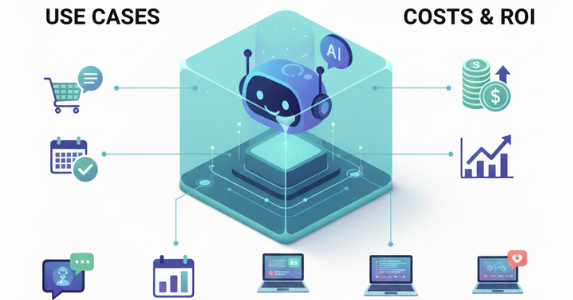
This detailed guide explains AI chatbot development for businesses, covering practical use cases, development costs, and return on investment.
What Is AI Chatbot Development
AI chatbot development involves creating conversational software powered by artificial intelligence technologies such as natural language processing and machine learning. These chatbots can understand user intent, analyze context, and respond in a human like manner.
Unlike traditional chatbots that follow predefined scripts, AI driven chatbots continuously learn from interactions and improve over time. They can be deployed on websites, mobile apps, messaging platforms, and internal business systems.
Why Businesses Are Adopting AI Chatbots
Modern customers expect instant responses and personalized support at all times. Human support teams alone often struggle to meet these expectations, especially during peak hours. AI chatbots provide a scalable solution that operates around the clock.
Businesses adopt AI chatbots to automate repetitive tasks, reduce response times, improve customer satisfaction, and gather valuable data from user interactions. These benefits make chatbots a strategic asset rather than just a support tool.
Key Use Cases of AI Chatbots for Businesses
Customer Support and Service Automation
Customer support is the most common use case for AI chatbots. Chatbots can handle frequently asked questions, order tracking, appointment scheduling, and basic troubleshooting without human intervention.
By resolving common issues instantly, businesses reduce support workload and allow human agents to focus on complex queries. This leads to faster resolution times and improved customer experiences.
Sales and Lead Generation
AI chatbots play a powerful role in sales and marketing. They can engage website visitors, qualify leads, recommend products, and guide users through the buying process.
Chatbots collect user preferences and behavior data, enabling personalized product suggestions and targeted follow ups. This increases conversion rates and shortens the sales cycle.
Ecommerce and Online Transactions
In ecommerce, AI chatbots assist customers with product searches, size recommendations, order status updates, and returns. They create a conversational shopping experience that improves engagement and reduces cart abandonment.
Chatbots can also handle payment related queries and provide post purchase support, enhancing overall customer satisfaction.
Internal Business Operations
AI chatbots are not limited to customer facing roles. Many organizations use them internally to support employees. Chatbots can answer HR related questions, assist with IT support, and provide access to company resources.
This automation improves productivity, reduces internal support costs, and ensures consistent information delivery across teams.
Healthcare, Banking, and Other Regulated Industries
In industries such as healthcare and finance, AI chatbots help users with appointment bookings, account inquiries, policy details, and basic guidance. When designed with proper security and compliance, chatbots enhance accessibility while maintaining data protection standards.
AI Technologies Behind Chatbot Development
AI chatbot development relies on several advanced technologies. Natural language processing enables chatbots to understand and interpret user input. Machine learning allows chatbots to improve responses over time based on data and feedback.
Some chatbots also use sentiment analysis to detect user emotions and adjust responses accordingly. Integration with backend systems and databases enables chatbots to provide accurate and real time information.
Cost of AI Chatbot Development
The cost of AI chatbot development varies depending on complexity, features, and deployment scale. Simple chatbots with basic conversational flows are relatively affordable, while advanced AI chatbots with deep learning capabilities require higher investment.
Key cost factors include chatbot type, number of integrations, language support, customization level, and ongoing maintenance. Businesses must also consider costs related to training data, cloud infrastructure, and continuous optimization.
Despite the initial investment, AI chatbots often reduce long term operational expenses by automating tasks and minimizing human intervention.
Measuring ROI of AI Chatbot Development
Return on investment is a critical consideration for any business technology. AI chatbots deliver measurable ROI in several ways.
They reduce customer support costs by handling a large volume of queries automatically. Improved response times and personalized interactions lead to higher customer satisfaction and retention. Increased lead conversion and sales directly impact revenue growth.
Businesses can track chatbot performance using metrics such as response accuracy, customer engagement, resolution time, cost savings, and conversion rates. These insights help optimize chatbot performance and maximize ROI.
Scalability and Long Term Value
One of the biggest advantages of AI chatbot development is scalability. Chatbots can handle thousands of conversations simultaneously without additional staffing costs.
As businesses grow, chatbots can be trained with new data, expanded to new channels, and integrated with additional systems. This long term adaptability makes chatbots a sustainable investment.
Security and Compliance Considerations
Security is essential in AI chatbot development, especially when handling sensitive data. Businesses must implement secure authentication, data encryption, and access controls.
Compliance with data protection regulations ensures user trust and reduces legal risks. Custom chatbot development allows businesses to design security measures aligned with industry requirements.
Choosing the Right AI Chatbot Development Partner
Selecting the right development partner plays a major role in chatbot success. Businesses should look for providers with experience in AI, natural language processing, and industry specific solutions.
A reliable partner focuses on understanding business goals, offers transparent pricing, and provides ongoing support and optimization. Collaboration ensures that the chatbot delivers real value rather than generic responses.
Future Trends in AI Chatbot Development
AI chatbots continue to evolve with advancements in artificial intelligence. Future trends include more human like conversations, voice enabled chatbots, deeper personalization, and predictive analytics.
Integration with omnichannel platforms and enterprise systems will further enhance chatbot capabilities. Businesses that invest early in AI chatbot development are better prepared for future digital transformation.
Conclusion
AI chatbot development for businesses offers powerful opportunities to improve customer engagement, reduce operational costs, and drive revenue growth. From customer support and sales to internal operations, chatbots deliver value across multiple functions.
By understanding use cases, costs, and return on investment, businesses can make informed decisions and implement chatbots strategically. With the right development approach and long term vision, AI chatbots become a key driver of efficiency and competitive advantage in the digital era.