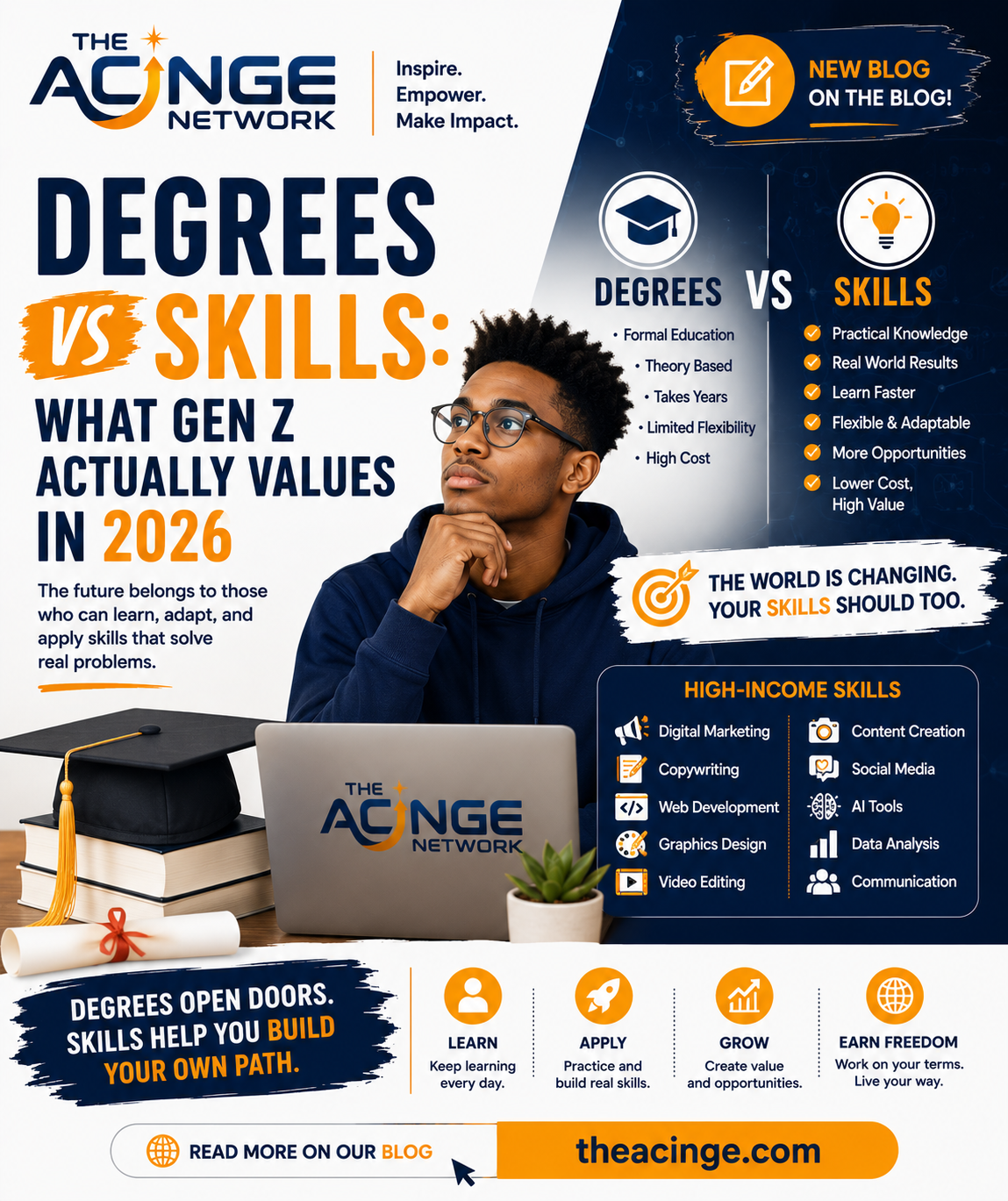
The debate around degrees vs skills is becoming one of the most important conversations shaping education, careers, and the future of work in 2026.
For decades, society taught people that success depended on getting a university degree, finding a stable job, and climbing the traditional career ladder. While education is still valuable, Gen Z is beginning to challenge the idea that a degree alone guarantees success.
Today’s world is changing rapidly. Technology is evolving, industries are transforming, and new digital opportunities are emerging every day. As a result, many young people are focusing less on certificates and more on practical skills that can help them earn, grow, and stay relevant in a competitive economy.
Gen Z is redefining success in a way previous generations never imagined.
Why the Degrees vs Skills Debate Matters in 2026
The world of work is no longer the same as it was ten years ago. Employers are becoming more interested in what people can actually do rather than only looking at academic qualifications.
In 2026, businesses value:
- Problem-solving ability
- Communication skills
- Digital knowledge
- Creativity
- Adaptability
- Real-world experience
This shift has made practical skills more important than ever before.
At the same time, many graduates around the world are struggling to find jobs despite having university degrees. This has caused many young people to question whether traditional education alone is enough to succeed in the modern economy.
Why Gen Z Is Prioritizing Skills
Gen Z grew up in the digital era. They have seen people build successful careers online without following traditional paths.
From content creators to digital marketers, software developers, freelancers, and online business owners, many individuals are generating income through skills they learned online.
Because of this, Gen Z values:
- Flexibility
- Financial independence
- Remote work opportunities
- Career freedom
- Practical knowledge
Instead of asking:
“Which degree should I study?”
Many are asking:
“Which skills will help me build the life I want?”
The Rise of Skill-Based Careers
Technology has created an entirely new economy where skills can often matter more than formal education.
Today, people can build careers in:
- Digital marketing
- Video editing
- Copywriting
- Graphic design
- Web development
- Social media management
- Artificial intelligence tools
- Content creation
Many of these industries focus more on portfolios and experience than academic qualifications.
For example, a skilled graphic designer with a strong portfolio may get hired faster than someone with a degree but no practical experience.
Are Degrees Still Valuable?
Even though skills are becoming more important, degrees still have value in many professions.
Fields such as:
- Medicine
- Law
- Engineering
- Accounting
- Nursing
still require formal education and certification.
A university degree can also:
- Build credibility
- Provide structured learning
- Create networking opportunities
- Develop critical thinking skills
However, in 2026, a degree without practical skills is often not enough.
Employers increasingly want individuals who can apply knowledge in real-world situations.
Why Employers Are Focusing on Skills
Companies today operate in fast-changing environments. They need workers who can adapt quickly and solve problems effectively.
As a result, many organizations now use skill-based hiring.
Instead of focusing only on educational qualifications, employers evaluate:
- Experience
- Portfolios
- Communication ability
- Technical skills
- Creativity
- Results and achievements
This shift benefits people who continuously learn and improve themselves outside traditional education systems.
The Internet Has Changed Everything
The internet has completely transformed access to learning.
In the past, people relied heavily on schools and universities to gain knowledge. Today, anyone with internet access can learn valuable skills online.
Platforms like:
- YouTube
- Coursera
- Udemy
- LinkedIn Learning
have made education more accessible than ever before.
This means people can:
- Learn at their own pace
- Build practical skills quickly
- Start freelancing online
- Create businesses from anywhere
The digital economy rewards people who are willing to learn continuously.
The Benefits of Learning High-Income Skills
Learning practical skills in 2026 offers several major advantages.
Increased Career Opportunities
People with valuable skills can work in multiple industries and adapt more easily to economic changes.
Faster Income Generation
Unlike traditional career paths that may take years, some digital skills can begin generating income within months.
Remote Work Flexibility
Many skill-based careers allow individuals to work from anywhere in the world.
Greater Independence
Practical skills create opportunities for freelancing, entrepreneurship, and side hustles.
Global Opportunities
Digital skills allow people to work with international clients and companies remotely.
Important Skills Gen Z Is Learning in 2026
Some of the most valuable skills in 2026 include:
- Digital marketing
- Artificial intelligence tools
- Coding and programming
- Copywriting
- Content creation
- Data analysis
- Video editing
- Graphic design
- Communication skills
- Personal branding
These skills are becoming increasingly important because businesses depend heavily on digital platforms.
You can also read our guide on personal branding in 2026 to understand how online visibility creates opportunities.
The Danger of Depending Only on Degrees
One major problem in today’s economy is relying entirely on academic qualifications without developing practical skills.
Many graduates struggle because they:
- Lack hands-on experience
- Have weak communication skills
- Cannot adapt quickly to digital trends
- Depend solely on certificates
This is why continuous learning is becoming essential.
The future belongs to people who can combine knowledge with practical ability.
Degrees vs Skills in Nigeria in 2026
The conversation around degrees vs skills is especially important in Nigeria.
Young Nigerians are increasingly exploring:
- Freelancing
- Remote jobs
- Online businesses
- Content creation
- Tech careers
as alternatives to traditional employment.
With the rise of the digital economy, practical skills are helping many people create income opportunities beyond local limitations.
As internet access continues to expand, more Nigerians are learning valuable digital skills and working with global clients.
Those who combine education with practical digital abilities will have a strong advantage in the future.
How to Build Valuable Skills in 2026
If you want to stay competitive in today’s world, here are practical steps you can take:
1. Identify High-Demand Skills
Focus on industries and skills that are growing rapidly.
2. Learn Online
Take advantage of free and paid online learning platforms.
3. Practice Consistently
Skills improve through repetition and real-world application.
4. Build a Portfolio
Show examples of your work online to demonstrate your abilities.
5. Develop Your Personal Brand
Your online presence can attract opportunities and help you stand out.
6. Stay Updated
Technology changes quickly, so continuous learning is important.
Common Mistakes Young People Make
When discussing degrees vs skills, many people make avoidable mistakes such as:
- Ignoring practical experience
- Waiting too long to learn digital skills
- Believing degrees automatically guarantee success
- Refusing to adapt to new technology
- Avoiding continuous learning
Success in 2026 requires flexibility, discipline, and the willingness to grow.
The Best Approach: Combining Degrees and Skills
The smartest strategy is not choosing one and rejecting the other.
A degree can provide:
- Knowledge
- Structure
- Credibility
- Professional qualifications
While practical skills provide:
- Adaptability
- Income opportunities
- Real-world value
- Career flexibility
Combining both creates a powerful advantage in today’s competitive world.
Final Thoughts
The debate around degrees vs skills reflects how rapidly the world is changing.
In 2026, success is no longer based only on academic qualifications. Employers, businesses, and clients increasingly value practical skills, creativity, and the ability to produce results.
Degrees still matter in many industries, but skills are becoming the foundation of long-term relevance and opportunity.
The people who succeed in the future will be those who continue learning, adapting, and developing valuable abilities that solve real problems.
Whether you are a student, entrepreneur, freelancer, or professional, investing in practical skills is one of the smartest decisions you can make today.
For more insights on productivity, personal growth, digital opportunities, and the future of work,
visit: theacinge.com